Are Your Family's Sins Haunting Your Children? Dr. Dan Schneider on Generational Curses, Inherited Sin, and Spiritual Warfare
Every family carries weight. Patterns of addiction, broken marriages, anger that passes from father to son, doors opened to darkness generations ago that nobody remembers closing. We sense something real is happening but we don't have the language for it, and the Church's answer is both more rigorous and more hopeful than the pop-spiritual version most of us have heard.
That's why when Dr. Dan Schneider, good friend of the podcast and Professor of Theology at Franciscan University of Steubenville, says he needed to write a book on this, you pay attention.
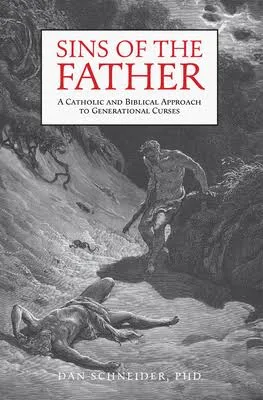
Sins of the Father: A Catholic and Biblical Approach to Generational Curses (TAN Books, 2026) is that book. In a recent episode of The Manly Catholic, Dr. Dan walked us through the core ideas: the theology, the field experience, and what it all means for your family.
Why This Book — and Why Now?
Dr. Dan didn't set out to write a standalone work on generational curses. He was finishing a follow-up to his Liber Christo Method field manual when, at Fr. Ripperger's encouragement, a chapter on the subject began to expand into something he couldn't contain. "A section became a chapter, and a chapter became its own book," he told James on the show.
What drove it was field experience. Years of working cases alongside exorcists and deliverance ministers, seeing children afflicted, even infants!, in ways that mapped clearly onto patterns running through their family lines.
The timing is not accidental. In 2024, the Spanish Bishops' Conference released a document directly addressing the "healing of the family tree" movement that has circulated through Catholic charismatic circles for decades. As Dr. Dan put it: "What I'm trying to do in this book is...show you a more excellent way. Let's use the ancient weapons, because those are what's best."
Defining the Terms: What "Generational Curse" Actually Means
Most of the confusion starts with bad definitions imported from Protestant charismatic circles. Dr. Dan traces the modern "healing the family tree" movement to Kenneth McCall, an Anglican medical therapist who blended Jungian psychology with his mission field observations. His framework, that unconfessed ancestral sins create chains binding the living, which must be ritually severed, is well-intentioned, but it is not Catholic theology. The 2024 Spanish Bishops' document directly confirms this.
So what does the Church actually teach? Dr. Dan breaks it into two words: generational and curse.
Generational = Inherited, Not Generated
"Generational" in proper Catholic usage does not mean sin is transmitted like a genetic disease. That idea is actually an ancient heresy called traducianism. This concept is the notion that a father passes his guilt directly to his children. The Church rejected this firmly. Sin is personal. Guilt is personal. You do not inherit your grandfather's guilt.
What you can inherit are consequences. Every action has a consequence. The Catechism of the Catholic Church (CCC 1472) states that every sin has a double consequence: an eternal dimension (loss of communion with God, healed through the sacraments) and a temporal dimension, which is an imbalance that must be satisfied, either in this life or in purgatory. It is that temporal, familial ripple effect that the book is exploring.
To quote the CCC in it's entirety, paragraph 1472 states:
1472 "To understand this doctrine and practice of the Church, it is necessary to understand that sin has a double consequence. Grave sin deprives us of communion with God and therefore makes us incapable of eternal life, the privation of which is called the "eternal punishment" of sin. On the other hand every sin, even venial, entails an unhealthy attachment to creatures, which must be purified either here on earth, or after death in the state called Purgatory. This purification frees one from what is called the "temporal punishment" of sin. These two punishments must not be conceived of as a kind of vengeance inflicted by God from without, but as following from the very nature of sin. A conversion which proceeds from a fervent charity can attain the complete purification of the sinner in such a way that no punishment would remain."
Curse = Privation of Protection and Provision
By "curse," Catholic theology is not primarily talking about a witch's hex. It refers to the privation that flows through a broken authority structure. A father and mother, by the nature of their office, are called to protect and provide. When grave sin removes a father from that role in various forms through addiction, incarceration, apostasy, or occult involvement, the family suffers the absence of what should have been there. That absence is the curse.
Dr. Dan illustrates this with what he calls the truck driver analogy. A truck driver stops at a bar on the way home, drives drunk, commits vehicular homicide, and goes to prison. The police don't haul his wife and children into a cell, but they suffer. Mom works two jobs. The kids are unsupervised. They sweat through summer because they can't pay the electric bill. They suffer the temporal effect of their father's sin; not guilt, but consequence. That is what the Church means by a familial curse.
The Biblical Case: Apparent Contradictions Resolved
One of the sharpest parts of the episode was Dr. Dan's treatment of the apparent contradiction between Exodus 20 and Ezekiel 18. In Exodus 20:5-6, it reads:"you shall not bow down to them or serve them; for I the LORD your God am a jealous God, visiting the iniquity of the fathers upon the children to the third and the fourth generation of those who hate me, but showing steadfast love to thousands of those who love me and keep my commandments".
In Ezekiel 18:2-4, it reads ". . . What is the meaning of this proverb you recite in the land of Israel: “Parents eat sour grapes, but the children’s teeth are set on edge”? As I live—oracle of the Lord GOD: I swear that none of you will ever repeat this proverb in Israel. For all life is mine: the life of the parent is like the life of the child, both are mine. Only the one who sins shall die!"
So...which is it?
The answer requires distinguishing two systems of justice, exactly as St. Augustine argued in his debate with Julian of Aeclanum. Human civil law rightly says it is unjust to punish a child for a father's crime. But divine justice operates differently. It is built into the very nature of sin that consequences flow outward.
Ezekiel's passage must be read in context. He is writing a courtroom-style judgment against people claiming innocence: "Our fathers sinned, and we're suffering for it." Ezekiel's response is blunt: this generation worshiped idols, this generation committed abominations. The coming exile is punishment for the living, not just inherited fallout. The "green grapes proverb" was being used as an excuse. God's answer: NO. You must own your sin.
St. Augustine extends the framework to its ultimate meaning: through baptism in Christ, the inherited guilt of original sin is lifted. As Dr. Dan put it, "All prophecy has a penultimate and an ultimate fulfillment. Ultimately, all prophecy points to Jesus Christ."
Why God Allows It: Five Reasons from St. Gregory the Great
One of the most powerful sections of the episode draws on St. Gregory the Great's answer to the question that haunts anyone who has suffered: Why does God allow demons to afflict us?
-
To punish sin. God uses the angels as instruments of justice to help us make satisfaction for our sins.
-
To rebuke the sinner. When we drift too close to destroying ourselves or our relationship with God, affliction becomes a warning and a grace pulling us back from the edge.
-
To educate and strengthen us. You can watch judo videos all day. Until you're on the mat getting thrown, you don't really learn. Spiritual combat is no different.
-
To encourage virtue. Sometimes affliction doesn't correct past wrongs or prevent future ones but simply deepens our love. As Jesus told St. Paul: "My power is made perfect in your weakness" (2 Cor 12:9).
-
To manifest divine glory. The man born blind in John 9 was afflicted "so that the works of God might be displayed in him."
God is not randomly dispensing suffering. He is a jealous Father, burning with love, working all things toward the sanctification of souls.
Active Curses, Freemasonry, and the Occult
Dr. Dan addresses something most Catholic writers avoid: active, intentional curses such as Freemasonry, Satanic ritual, blood oaths, and other occult entanglements.
When a father doesn't merely sin passively but actively invokes preternatural agents something darker embeds into the family line. The protection he owes his family has not merely been withdrawn; demonic permission has been explicitly granted into that household.
Fr. Ripperger has observed that in 50% of possession cases where the individual was also a victim of childhood sexual abuse, Freemasonry appears somewhere in the family background. Dr. Dan has personally seen two separate families with the same structure (a daughter who abandoned the faith, a son with developmental challenges, a daughter with gender confusion), both with identical Masonic involvement on the paternal side.
It is important to note hese are observable patterns, not deterministic sentences. God's providence governs all of it. But it shapes the spiritual battle a family may face.
Dr. Dan holds up the Martin family as the counterexample. They suffered deeply. And yet: five Carmelites from one family, a canonized couple, a Doctor of the Church. The obstacle they placed before the effects of sin was a life of heroic Catholic virtue. "It is not deterministic," Dr. Dan said. "You put obstacles and the obstacle is a life of virtue."
The Critique of "Healing the Family Tree" and the More Excellent Way
The 2024 Spanish Bishops' document identified several theological errors in the "healing the family tree" movement: it contradicts the doctrine of purgatory, collapses proper ecclesiology, eliminates personal responsibility, and promotes a deterministic view of sin incompatible with Catholic anthropology.
The core problem is the passive-recipient framing; that a person is simply chained by ancestors and must have those chains liturgically severed through a special Mass. As Dr. Dan puts it in the book, the Mass is not a hammer for driving tent stakes. Using it that way misunderstands both the Mass and the nature of sin's effects.
The proper response is the full sacramental and penitential life of the Church: prayers of satisfaction and penance, Masses offered for specific souls and where appropriate, Gregorian Masses. Pray for the people, not for abstract "family trees." Go to confession. Do penance. Carry your cross. These are the ancient weapons.
There Is Always Hope: The Mercy of God Is Greater
Dr. Dan's wife gave him a standing editorial mandate as he wrote each chapter: "Don't try to depress. Don't try to impress. Just bless." The result is that every chapter ends with a story from the field, a message of hope, a prayer from St. Alphonsus Liguori, a prayer to Our Lady, and a deliverance prayer from Fr. Ripperger's resources for the laity.
Jean-Pierre de Caussade put it plainly: we would be utterly destroyed were it not for two things: the mercy of God and the infinite merits of Jesus Christ.
St. Faustina's diary records the Lord saying: "The greater the sinner, the greater the right he has to my mercy." That is not a license for sin. It is a lifeline for the person crawling out of a family history of darkness, wondering if God can reach that far. He can. He always has.
What This Means for You as a Catholic Man
At the close of the episode, Dr. Dan said something worth sitting with:
"God's not going to say, 'James, man, you had a great podcast. How many likes and shares did you have?' He's going to say: give me your wife, give me your kids, give me your grandkids. What did you do? Did you pass on the faith?"
That is what is at stake. The primary job of a Catholic man is not his career, his status, or even his ministry. It is his family. The office of fatherhood to protect and to provide is a sacred trust with eternal consequences running in both directions through time.
The good news is that those ripples can be interrupted. The man who picks up his cross, goes to confession, prays his Rosary, guards the faith of his household, and dies to himself so Christ can live...that man is placing obstacles in the path of darkness that his children and grandchildren may never know they needed.
That is what Catholic masculinity is for. And that is why Sins of the Father is one of the most important books a Catholic man can read right now.
Get it here today.
Resources from This Episode
Other books by Dr. Dan: Spiritual Warfare Q&A: Priests and Laity (TAN Books, 2025) and The Liber Christo Method (TAN Books, 2023)
Also mentioned: Fr. Ripperger's Deliverance Prayers for the Laity · St. Faustina's Diary: Divine Mercy in My Soul · CCC 1472
Go out there and be a saint.

He Couldn't Stop. Neither Could Millions of Other Men. Here's What Finally Works.